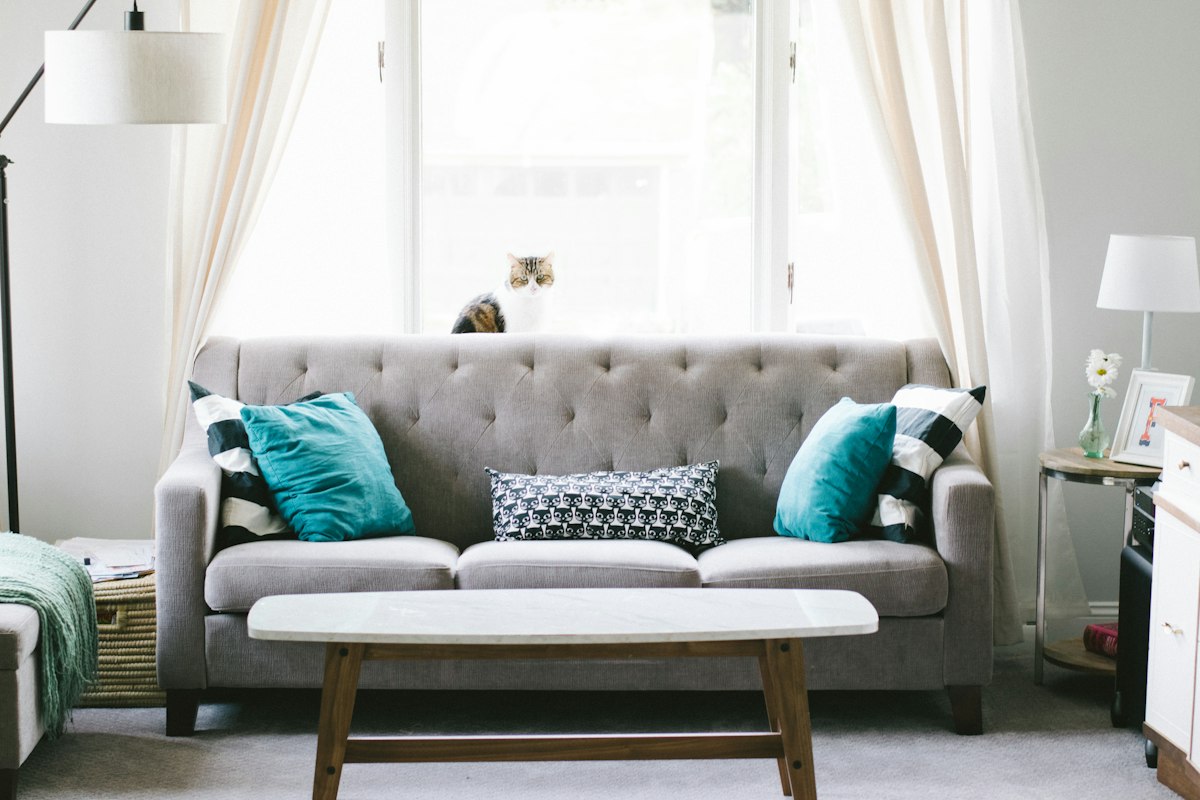
A reading corner begins with a useful seat rather than a shopping list of cozy objects. It may occupy one end of the sofa, a chair beside a bedroom window or a quiet part of the living room. The aim is to make opening a book easy enough that the space gets used between ordinary tasks. These editorial suggestions do not report hands-on furniture testing or promise any wellbeing outcome.
Choose a place around your routine
Think about when you usually read. A sunny window can be appealing on weekend mornings, while the same position needs an appropriate lamp after dinner. Consider nearby noise and whether you want company or separation. Someone watching children play may prefer a living-room view to a secluded corner. A space that suits the actual routine is more useful than one arranged around an occasional imagined afternoon.
Sit in the proposed place with a book before adding furniture. Notice page reflections, kitchen noise and doors opening nearby. Check the route through the room with another person seated. A chair in the main passage will gradually be pushed aside even if it looks beautiful. When the only free area creates that problem, use an existing sofa seat with its own light instead of forcing in another piece.
Compare chairs by how you sit
An upright reader may like a supportive back and feet on the floor. Someone who curls up needs a different seat depth and width. A high back, low arm or broad cushion can help in the right setting, but one shape does not suit everyone. Try a chair where practical and read its dimensions. Product photographs often use generous rooms that make a substantial piece appear deceptively modest.
Compare the seat and armrests with the position where you hold a book. Include a footstool's occupied footprint and storage location if you want one. Reclining furniture needs room through its movement, not just while closed. Follow the maker's guidance and check delivery access. A chair fitting the corner but unable to turn through the stairwell is still unsuitable. Compare return conditions before ordering large furniture online.
| Reading pattern | Setup to investigate | Main tradeoff |
|---|---|---|
| A few pages beside family life | Sofa seat and adjustable lamp | Less separation from activity |
| Longer sessions with feet up | Chair with suitable footstool | Larger occupied footprint |
| Compact bedroom | Small chair and narrow side surface | Limited accessory space |
| Shared reading place | Adaptable seat and adjustable light | Users may prefer different settings |
Put light on the page
Task lighting should serve the book without shining directly into your eyes. Try the lamp beside your shoulder and check shadows at your normal book height. A fixed shade that looks attractive alongside the chair may not direct light where you need it. Adjustable fixtures offer alternatives, but inspect controls and stability as well as movement. Consider how easily the lamp can be switched off from the seat.
Read electrical and bulb requirements before buying. For dimming, establish compatibility between lamp, bulb and control. Plan cords away from walking routes. A rechargeable light may avoid a cable but introduces charging and product-specific runtime considerations. If runtime matters, examine the conditions behind the manufacturer's claim rather than assuming the highest output lasts as long as its lowest setting. Product specifications are more useful than generic promises about convenience.
Keep the landing place modest
A side table needs to hold what you actually use, perhaps a cup, glasses and the current book. Check its height and reach from the chair. A large table is not automatically easier to use when it crowds the seat. A stable small surface may suffice. Avoid resting drinks on a soft stool or unstable book pile merely because the arrangement is attractive in a photograph.
Keep current reading nearby rather than requiring the corner to contain the complete library. A shelf or basket can work if it is accessible, cleanable and clear of the route. A throw should have one obvious resting place. Every extra object becomes something to move before sitting. The corner should invite use immediately, without a preparatory sequence of shifting pillows and relocating ornaments to the floor.
What to skip
Skip a chair selected solely because its listing calls it a reading chair. Skip a towering bookcase when a few books are all you need nearby. Skip decorative tables too small to hold the usual cup safely. Skip buying a coordinated accessory collection before testing seating and lighting together. Those two decisions shape the experience more directly than whether the cushion and lampshade share a pattern.
Frequently asked questions
Does the corner need a window? No. Lighting that works at your usual reading time and a location you enjoy matter more than a specific architectural feature.
Can a dining chair work? It can suit short sessions if comfortable for you. Try existing furniture before assuming a specialist purchase is necessary.
Where should a limited budget go? Improve the least comfortable part of your current setup, whether seating, light or a reachable surface. Browse Home Design and our layered lighting guide for related choices.